

About Terpenes
Terpenes: Gifts from Nature – Natural Chemical Raw Materials
Terpenes are substances extracted from plants such as pine trees and orange peels. They are environmentally friendly resources that can be repeatedly produced through the blessings of sunshine.


What Are Terpenes?
Terpenes are biosynthesized within plants and are composed of isoprene units, typically represented by the chemical formula (C5H8)n.
One of the typical terpene compounds, alpha-pinene, brings about the relaxing effects of forest bathing for us. And for plants, it is considered one of the important chemicals, phytoncides, that help to prevent their external enemies and protect themselves.
Terpenes are widely found in nature, especially in essential oils of plants. Some of the stable and large quantities of terpenes that can be used as industrial raw material include turpentine oil from pine trees and orange oil from citrus peels.
Unlike petroleum resources, which are at risk of depletion, terpenes are renewable and valuable resources that plants can continuously produce using the blessing of sunshine.
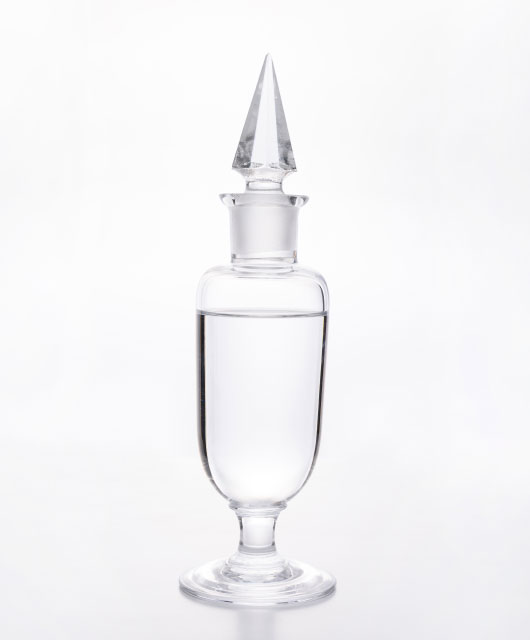
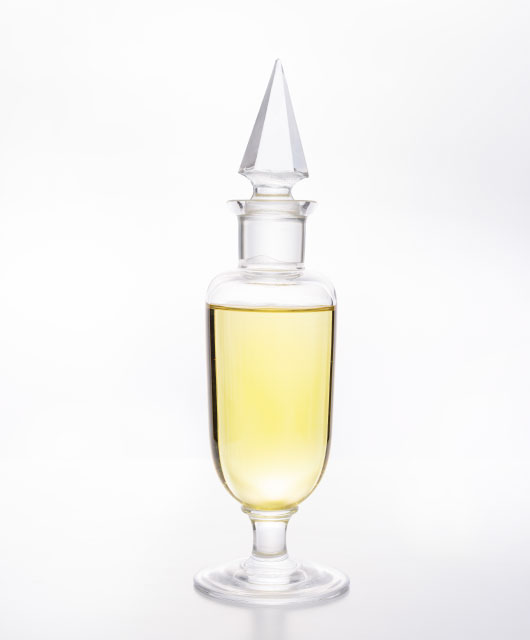

Terpenes as Chemical Raw Materials
The term “terpene” refers to hydrocarbons with the molecular formula C10H16. Its origine is from the word “turpentine”, common components of the essential oil found in pine tree sap. The chemical structure is characterized by several series of isoprene (C5H8) units. A group of terpene and terpene-like compounds, including derivatives and analogs, is called “terpenoids”. These terpenoids are widely used in everyday life—not only as chemical raw materials but also in fragrances, pharmaceuticals, etc.
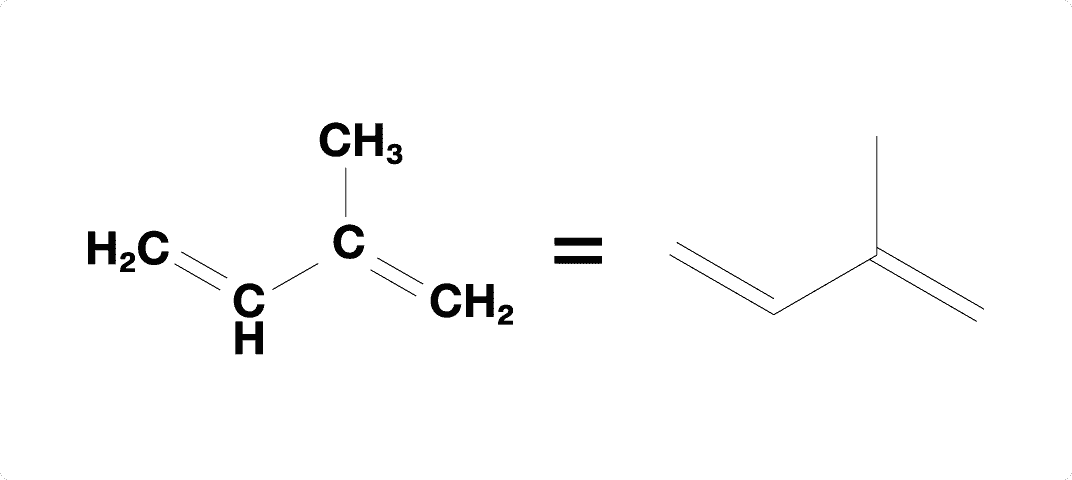
Structure of Isoprene
Isoprene is the basic unit of terpenes. Terpenes are classified based on the number of isoprene units.
Terpenes = Multiple linked isoprene unit compounds
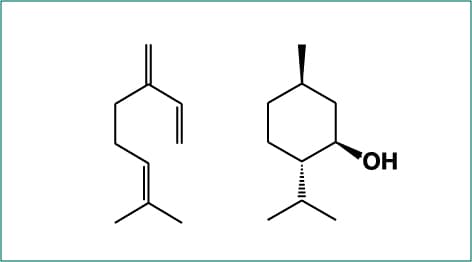
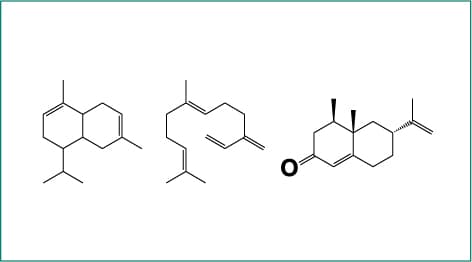
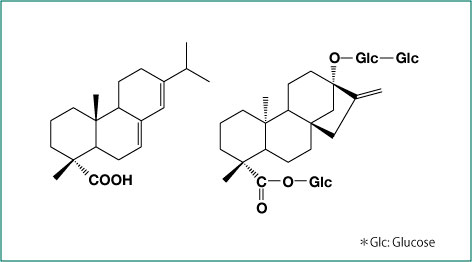
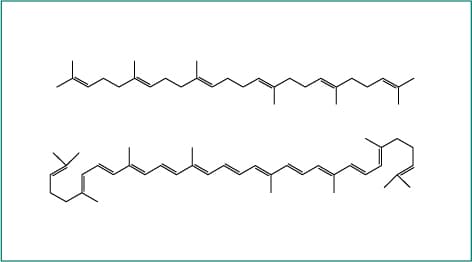
Examples of Terpenes/Terpenoids and typical Compounds
Monoterpenoids (C₁₀, 2 isoprene units)
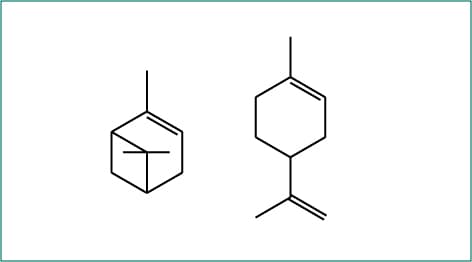
Sesquiterpenoids (C₁₅, 3 isoprene units)
Diterpenoids (C₂₀, 4 isoprene units)
Triterpenoids (C₃₀, 6 isoprene units)
Carotenoids (C₄₀, 8 isoprene units)

Terpenes – Used as SAF in Japan during WW II
During World War II, Japan faced a shortage of petroleum due to disrupted imports. To make up for this, turpentine oil was produced from pine roots as a national policy. Dry distillation plants for pine roots were established across the country and operated under military protection, the pine root turpentine was supplied to the military as an alternative fuel. After World War II, these plants and their facilities were converted from military to civilian use, contributing to Japan’s postwar recovery.